



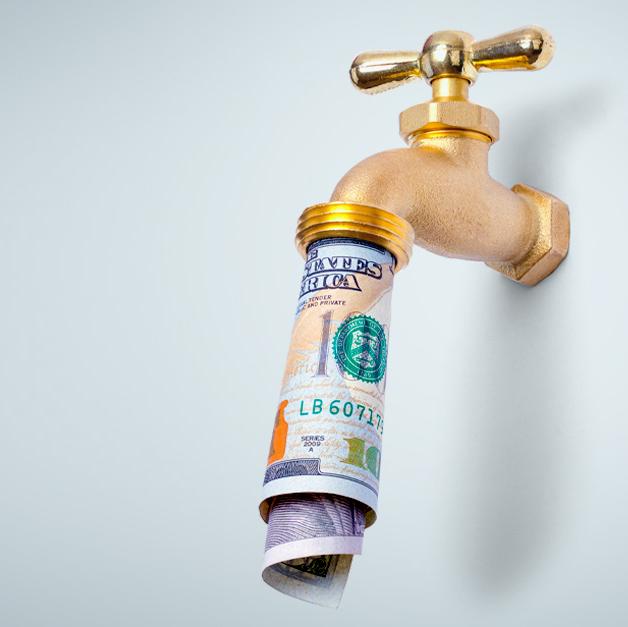












An effective solution to long-term currency hedging needs
Cross-currency swaps offer companies opportunities to reduce
borrowing costs in both domestic and foreign markets. They are also
a simple and effective solution to long-term currency hedging needs.
Investors use cross-currency swaps to manage the currency risk in foreign
investment portfolios and to create synthetic assets with a specific
currency risk profile.
How Does it Work?
A currency swap involves the exchange of payments denominated
in one currency for payments denominated in another. Payments are based
on a notional principal amount the value of which is fixed in exchange
rate terms at the swap's inception.
Periodic swap payments are made in the appropriate currencies based
on specified reference interest rates. When the swap matures, a final
payment representing the change in the value of the swap notional principal
is made between parties to the swap. Alternatively, the principal values
can be re-exchanged at maturity at the original exchange rate.
Because currency swaps involve exchange risk on principal, the credit
risk associated with these transactions is substantially greater than
with interest rate swaps.
Applying Currency Swaps
Corporations and financial institutions use currency swaps to
manage the exchange and interest rate risks associated with foreign
currency financing and investing. Currency swaps are also valuable as
long term hedges of translation risk and in many instances represent
an attractive alternative to long-dated forward foreign exchange cover.
Currency swaps can be used in a variety of situations. By using them
companies can:
Tap Foreign Capital Markets for Low Cost Financing.
The ability to swap interest payments related to financing denominated
in foreign currency allows domestic debt issuers to tap new markets,
expand the investor base, and lower borrowing costs.
Foreign debt issues by top-rated companies are well-received by
foreign investors seeking to diversify credit risks and can be quite
cost-effective compared to domestic issues. Through cross-currency
swaps the debt is converted to the issuer's domestic currency, eliminating
currency risk while preserving the cost advantages achieved by issuing
off-shore.
Lower Financing Costs for Foreign Subsidiaries.
Companies operating foreign subsidiaries typically prefer to
finance operations in local currency to eliminate currency risk.
While borrowing locally may sometimes be cost effective, the parent
can often borrow more cheaply in its home market and base currency.
Currency swaps provide the bridge to exchange-protected least cost
financing for off-shore operations.
Enhance Buyer Financing Programs.
Many companies provide long-term buyer finance programs to support sales efforts.
Hedging the currency and rate risk of competitively priced programs
for offshore buyers is another area where currency swaps add value.
Buyer financing is extended in the customer's currency of choice
then swapped to the seller's local currency to eliminate exchange
risk. In countries where export incentive programs are available,
currency swaps allow borrowers to access incentive pricing without
accepting unwanted currency and rate risk.
Cross currency swaps are an essential tool
in managing cross-border business and investment activities. Their
simplicity and flexibility in many different applications have made
cross-currency swaps among the most frequently used derivative instruments
in the corporate arena.
|